
Ground floor · 20th c.
Hopper, "Hotel Room"
The museum's jewel: Edward Hopper's urban loneliness distilled into a 1931 hotel room.
The Thyssen is the museum that tells the story of painting almost in one go: from the Italian and Flemish primitives to the 20th-century avant-gardes. If you're short on time, this is our pick of the masterpieces and must-see rooms, ordered floor by floor so you don't miss a thing.
🎟️ Coming to see them in person? How to buy your ticket · direct: skip-the-line ticket (€14)
It occupies the Villahermosa Palace, at Paseo del Prado 8, and together with the Prado and the Reina Sofía it forms Madrid's so-called Art Triangle. Its collection can be seen at a relaxed pace in an hour and a half to two hours. To plan your visit you can check what the ticket includes and the opening times and prices.
So you can spend your time looking at paintings instead of queuing, book your ticket to the permanent collection with instant confirmation through Civitatis. And if you're also visiting the Prado or the Reina Sofía, consider the Paseo del Arte (Art Walk) pass.
Check availability (from €14) →The museum is designed to be visited from top to bottom, following the chronological order of painting. As a rough guide (room layouts may change due to refurbishments or temporary exhibitions, so do confirm at the museum), the collection is spread out like this:
Tip: if time is tight, start with Floor 1 (Impressionism) and the ground floor (20th century), which is what you'll see least of at the Prado.
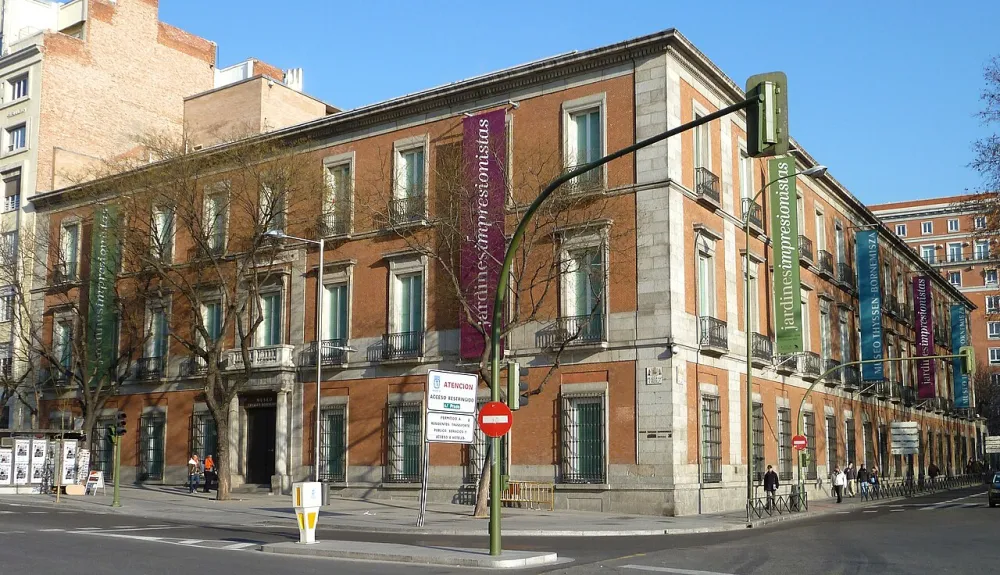
This is where the route begins, with the part of the collection that speaks directly to the Prado, but from another angle. It's the most "classical" block and the one that gathers some of the museum's most famous portraits.
Albrecht Dürer's Jesus among the Doctors is one of the gems of German Renaissance painting, with that almost goldsmith-like attention to detail so typical of the artist. In these rooms you can see how the portrait stopped being a religious commission to become a genre in its own right.
One of the paintings people search for most: the portrait of Henry VIII of England by Hans Holbein the Younger. It's the image that has fixed the monarch's face in the collective imagination —corpulent, laden with jewels and power— and a lesson in how painting also served as political propaganda.
Caravaggio's Saint Catherine of Alexandria shows his famous chiaroscuro: a dramatic light that pulls the figure out of the shadows and makes it almost tangible. Around it you'll find Italian, Flemish and Spanish Baroque painting that rounds out the story of the Old Masters.
For many people, this is the reason to come to the Thyssen. It brings together one of the finest collections of Impressionism and Post-Impressionism you can see in Spain, something neither the Prado nor the Reina Sofía offers in this depth.
French Impressionism is very well represented: the effects of light and water by Claude Monet, the dancers and scenes of movement by Edgar Degas and the luminous brushwork of Pierre-Auguste Renoir. It's the ideal room to understand how painting left the studio to capture life in the open air.
Post-Impressionism brings colour and emotion to the fore. From Vincent van Gogh, his landscapes of vibrant brushwork stand out, and from Paul Gauguin, the flat-colour, symbolist compositions that already herald the 20th century. These are works that set up the leap to the avant-gardes on the ground floor.
The final stretch is what makes the Thyssen unique: here is the 20th century and, above all, American painting, rarely present in other Spanish museums.
The museum's most iconic work is "Hotel Room" (1931) by Edward Hopper: a woman sitting in the half-light of an anonymous room, a train timetable in her hand. It's the essence of Hopper —urban loneliness, cutting light, silence— and for many travellers it alone is worth the visit.
Wassily Kandinsky is represented in the shift from figuration to abstraction, with compositions where colour and form break free from the visible world. Alongside him, German Expressionism (the Die Brücke group, among others) delivers some of the most intense rooms on the route.
Abstract Expressionism arrives with Mark Rothko and his great fields of colour, designed to envelop the viewer. It closes a route that, in barely two hours, goes from Gothic gold to contemporary abstraction.
Among the 20th-century painting, Balthus is not to be missed, with his enigmatic, unsettling figuration, going against the grain of the avant-gardes of his time. It's a good example of how varied the last stage of the collection is.
If you could only see a handful of works, we'd start with these.
The museum's jewel: Edward Hopper's urban loneliness distilled into a 1931 hotel room.
The portrait that fixed the image of the King of England forever, a masterpiece by Hans Holbein the Younger.
One of Spain's best Impressionist rooms: light, water and movement in loose brushwork.
Colour as emotion: Van Gogh's vibrant landscapes and Gauguin's symbolism.
Chiaroscuro taken to the extreme: dramatic light and realism in an icon of the Italian Baroque.
From the birth of abstraction to the great colour fields of Abstract Expressionism.
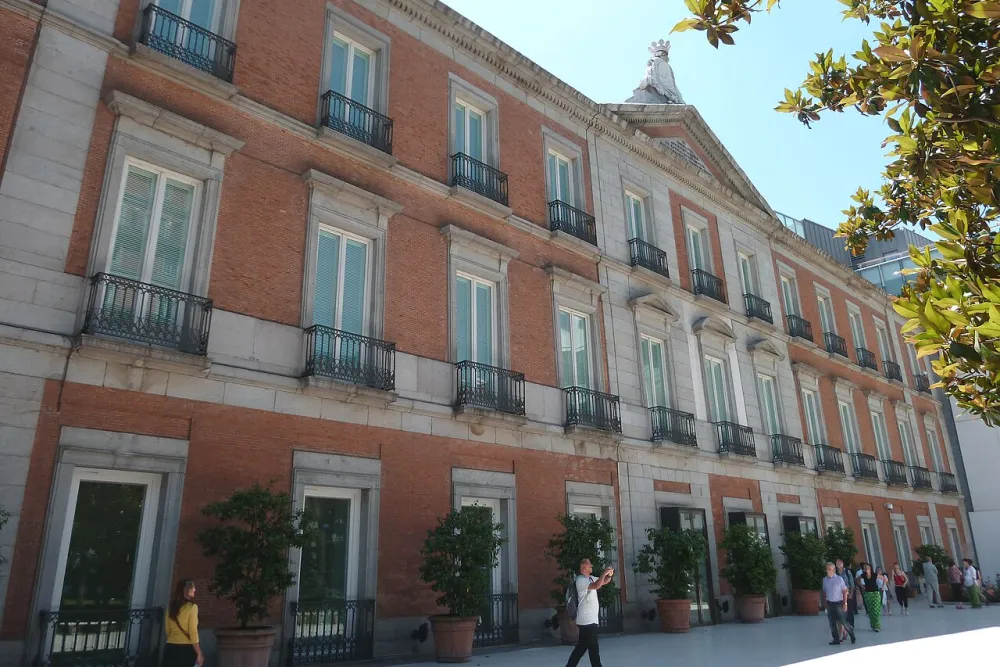
Its works complete what its neighbours tell: at the Prado, classical Spanish and European painting; at the Reina Sofía, 20th-century art and Guernica. Together they form the Paseo del Arte.
Everything you need to organise your day at the Thyssen.